
The Rise of Garden Rooms in the UK: Costs, Planning Rules and Remote Work Trends
Remote and hybrid working have permanently changed how people use their homes in the UK. What began as an emergency response to the COVID-19 pandemic has evolved into a long-term shift in working patterns — and with it, demand for dedicated home workspace has increased sharply.
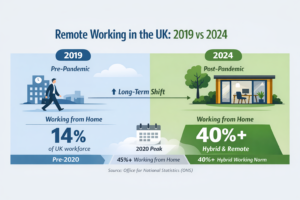
According to the Office for National Statistics (ONS), over 40% of the UK workforce worked from home at least part-time in 2022–2024, with hybrid working now the most common arrangement for professional and managerial roles. While full-time homeworking has declined since its 2020 peak, the overall level of remote work remains significantly higher than pre-pandemic levels.
As a result, homeowners are increasingly adapting their properties to accommodate permanent workspace — and garden rooms have emerged as one of the fastest-growing solutions.
UK Garden Rooms: Key Facts & Statistics
Remote & Hybrid Working
Over 40% of UK workers now work from home at least part-time
(Office for National Statistics)Pre-Pandemic vs Now
Fewer than 15% of UK workers had ever worked from home before 2020
(ONS historical labour data)Cost Comparison
Typical UK home extension: £40,000–£80,000+
Professionally built garden rooms: significantly lower starting costs with shorter build times
(Industry data, housing market reports)Planning
Many garden rooms fall under permitted development, avoiding full planning permission
(Planning Portal, Gov.uk)Moving Costs
Average cost of moving home in England exceeds £30,000 once stamp duty, legal fees and moving costs are included
(Rightmove, Zoopla)

Remote Working Has Reshaped UK Housing Needs
ONS labour market data shows that pre-2020, fewer than 15% of UK workers had ever worked from home. By 2020, this figure rose above 45%, and although it has since stabilised, hybrid working has become embedded across many industries.
|| “Hybrid working is now the most common working pattern for office-based roles in the UK.” — ONS ||
This structural change has highlighted a mismatch between how UK homes were designed and how they are now used. Many households lack spare rooms that can function as quiet, permanent offices — particularly in urban areas with smaller average property sizes.
Why Garden Rooms Have Grown Faster Than Home Extensions
Rising construction costs have made traditional home extensions less accessible.
According to industry and housing market data:
-
The average single-storey extension in the UK now costs £40,000–£80,000+
-
Build times often exceed 4–6 months
-
Planning uncertainty adds risk and delay
By contrast, professionally built garden rooms:
-
Typically cost less than half the price of an extension – typical garden room costs for London here
-
Are usually installed within 2–4 weeks
-
Cause minimal disruption to the main house
|| “Garden rooms offer a lower-risk, faster alternative to extending, particularly for homeowners who need workspace rather than additional living space.” ||

Planning Rules Have Accelerated Garden Room Adoption
One of the most significant drivers of garden room growth is the UK’s permitted development framework.
Under current rules, many garden rooms can be built without full planning permission, provided they meet limits on:
-
Height
-
Coverage
-
Distance from boundaries
-
Residential use
According to the Planning Portal, small detached outbuildings are among the most common forms of permitted development in England.
See here for more about planning rules for garden rooms.
This planning flexibility:
-
Reduces professional fees
-
Shortens project timelines
-
Removes uncertainty for homeowners
|| “Permitted development rights have made garden rooms one of the lowest-friction ways to add usable space to a home.” ||
Urban Housing Pressure Is Driving Demand
Demand for garden rooms is strongest in cities — particularly London and the South East.
According to Rightmove and Zoopla data:
-
The average cost of moving home in England exceeds £30,000 once stamp duty, fees and moving costs are included
-
In London, that figure is often significantly higher
At the same time:
-
Average property sizes are smaller
-
External space is often the only expansion option
For many urban homeowners, garden rooms represent a way to adapt an existing property rather than re-enter the housing market.

Energy Efficiency and Year-Round Use
Modern garden rooms differ significantly from traditional sheds or summerhouses.
According to the Energy Saving Trust, heating costs are strongly influenced by insulation quality, with well-insulated buildings using up to 50–60% less energy than uninsulated structures.
As a result, most year-round garden rooms now include:
-
Insulated walls, roofs and floors
-
Double-glazed windows and doors
-
Proper electrical installations
This shift has repositioned garden rooms as permanent, energy-efficient spaces, rather than seasonal buildings.
Who Is Building Garden Rooms?
Market observations and installer data indicate that garden rooms are most commonly built by:
-
Hybrid and remote professionals
-
Small business owners
-
Freelancers and creatives
-
Households needing flexible multi-use space
In many cases, the space evolves over time — starting as an office and later becoming a studio, consulting room or additional living area.
Are Garden Rooms a Long-Term Trend?
While housing trends fluctuate, several indicators suggest garden rooms are likely to remain popular:
-
ONS data shows hybrid work remains structurally embedded
-
Housing affordability pressures persist
-
Permitted development continues to favour small-scale outbuildings
|| “Garden rooms appear to be a structural response to long-term changes in how people live and work, rather than a short-term pandemic trend.” ||
Key Takeaways
-
Over 40% of UK workers now work from home at least part-time (ONS)
-
Hybrid working has created sustained demand for dedicated workspace
-
Garden rooms offer a faster, lower-risk alternative to extensions
-
Permitted development has reduced planning barriers
-
Demand is strongest in urban areas with high moving costs